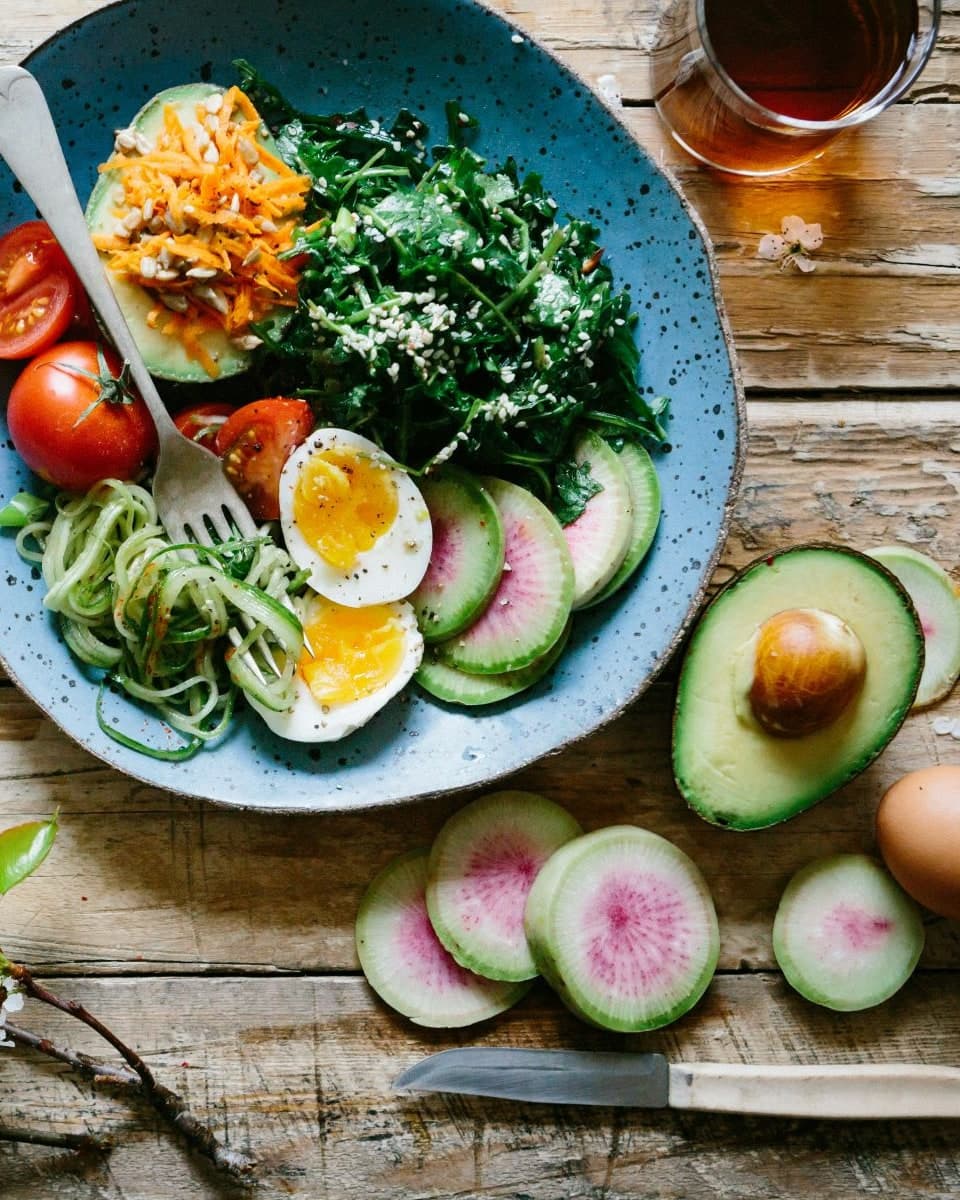
“You are what you eat” is one of those lines you hear so often it becomes background noise. But once you look at what is healthy food through that lens, it stops feeling like a slogan and starts feeling uncomfortably literal.
Seeing Food As Building Material
I’ve heard “you are what you eat” a million times, and I’ve mostly shrugged it off. It felt metaphorical, like saying “you are your habits” or “you are your thoughts.” True in a loose way, but not something I’d actually picture.
That changed during a food chapter in Good Energy: The Surprising Connection Between Metabolism and Limitless Health by Casey Means.
She pointed out the obvious fact that the food we put in our bodies gets broken down and literally becomes part of our body. Not just fuel we burn and forget, but actual material: what your cells are made of, what your tissues are repaired with, what your body uses to build or maintain itself.
Suddenly the question “what is healthy food?” stopped being abstract and started feeling like “what do I want my body to be made out of?”
Letting The Imagination Run With It
Once she framed it that way, I gave my imagination permission to run. I pictured my skin made out of fast food containers and candy wrappers. My cells patched together with whatever came out of boxes and drive-thru windows. My body quietly trying to build itself out of materials that were never really meant to be structural.
It’s obviously not literally cardboard and plastic in there, but as an image, it was enough to make me pause.
If I think of what is healthy food as “food my body can use as good building material,” then:
- Whole, minimally processed foods make more sense.
- Ultra processed stuff starts to look less like neutral “treats” and more like questionable supplies.
- The idea of “just this once” feels different when I remember each “once” still contributes to what the system is made of.
A Simple Question Before Eating
I’m not planning to turn this into a rigid rule set. I’m still going to eat fun things. I’m still human.
But I am going to start thinking about that image every time I eat from now on. When I reach for something, I want to quietly ask:
- “If this food becomes part of me, am I okay with that?”
- “Does this look more like healthy building material or more like junk my body has to struggle to work with?”
It’s a small mental shift, but it changes how “what is healthy food” feels in practice. It’s no longer just about calories or macros or whether something fits into a diet label. It’s about what kind of body I’m slowly building out of my choices.
For me, that’s enough to make some decisions easier. Not because I suddenly hate certain foods, but because I’m a little more aware of what I’m asking my cells to live with.